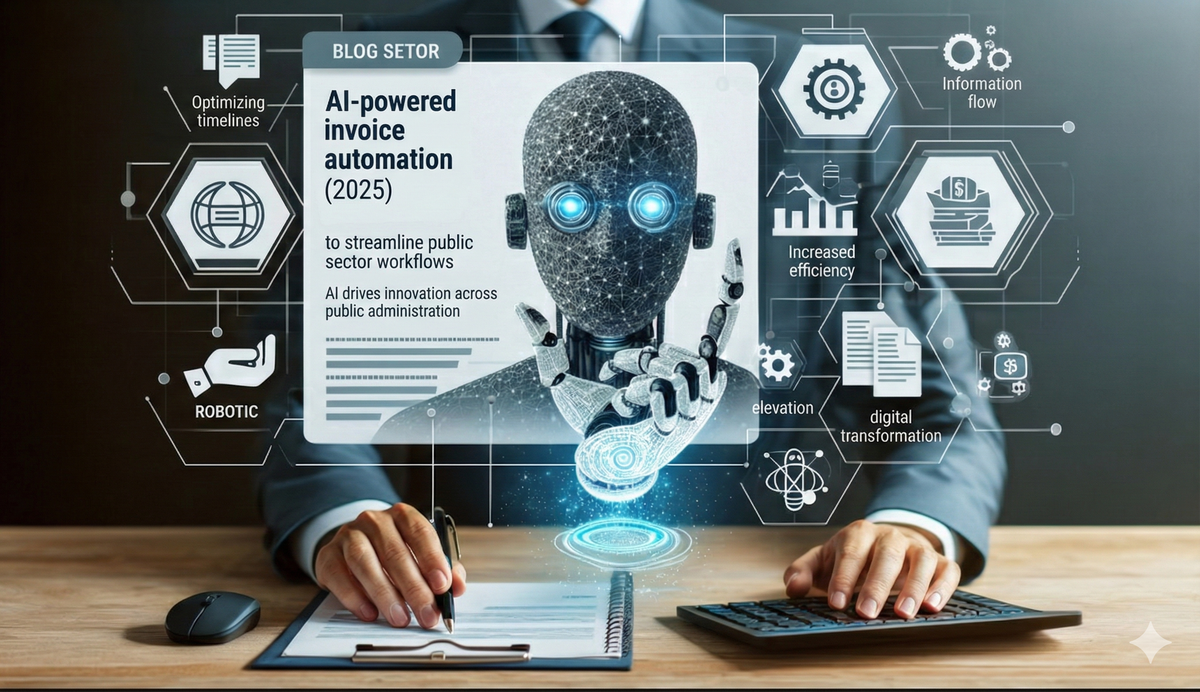
AI-Powered Invoice Automation to Streamline Public Sector Workflows
Introduction
In the ever-evolving landscape of public services, the quest for efficiency and improved service delivery is paramount. Enter AI-powered invoice automation—a game-changer for public sector workflows. This technology promises not only to streamline processes but also to enhance government efficiency significantly. In this article, we'll delve into how AI can transform public sector workflows through invoice automation, offering insights into its benefits, real-world applications, and future potential.
Understanding AI-Powered Invoice Automation
AI-powered invoice automation refers to the use of artificial intelligence technologies to manage and process invoices with minimal human intervention. By leveraging machine learning algorithms and natural language processing, this technology can accurately capture, analyze, and process invoice data. It seamlessly integrates with existing accounting systems, ensuring that data flows smoothly from capture to payment, reducing the likelihood of errors and delays.
Benefits of Invoice Automation in the Public Sector
The implementation of AI-powered invoice automation in the public sector offers numerous advantages:
Enhanced Efficiency
Manual invoice processing is often time-consuming and prone to errors. Automation accelerates this process, allowing government employees to focus on more strategic tasks, thereby boosting overall productivity.
Cost Savings
By reducing the need for manual intervention, AI in public services can result in significant cost savings. This is achieved through fewer errors, quicker processing times, and reduced reliance on paper-based systems.
Improved Accuracy
AI's ability to accurately capture and process data minimizes the risk of human error. This ensures that payments are made correctly and on time, which is crucial for maintaining trust and accountability in public sector operations.
Case Studies and Real-World Applications
Several government agencies have already begun reaping the benefits of AI-powered invoice automation, setting benchmarks for others:
Local Municipalities
In municipalities where budgets are tight, adopting AI-powered solutions has led to streamlined financial operations. For instance, a mid-sized city in Illinois implemented AI-driven invoice processing, reducing their invoice handling time by 50%, which allowed staff to redirect efforts to community-focused projects.
Federal Agencies
At the federal level, agencies handling large volumes of transactions have reported significant improvements. For example, a government department in the UK reported a 70% reduction in processing errors after implementing an AI-powered system, leading to greater public trust and improved service delivery.
Challenges and Considerations
Despite the benefits, there are challenges to be mindful of when adopting AI in public sector workflows:
Data Security
With the handling of sensitive financial information, ensuring robust data security measures is crucial to protect against breaches and unauthorized access.
Integration with Legacy Systems
Many government agencies still rely on outdated systems. Seamlessly integrating AI-powered solutions with these systems can pose a challenge, requiring careful planning and execution.
Training and Change Management
Shifting to automated processes requires training staff to adapt to new technologies and workflows, which can be met with resistance if not managed properly.
Future of AI in Public Sector Workflows
The future of AI in public services looks promising, with potential applications extending far beyond invoice automation. As governments continue to embrace digital transformation, AI could revolutionize numerous other areas, such as citizen engagement, resource allocation, and policy development. The ongoing refinement of AI technologies will likely lead to even more innovative solutions, further streamlining public sector workflows and enhancing government efficiency.
Conclusion
AI-powered invoice automation offers a compelling opportunity for the public sector to enhance efficiency, reduce costs, and improve accuracy in financial operations. By addressing challenges such as data security and system integration, government agencies can unlock the full potential of AI in their workflows. As we look to the future, the continued adoption of AI in public services holds the promise of greater efficiency and innovation. If you're part of a government agency seeking to transform your operations, consider exploring AI-powered solutions to lead the way in public sector innovation.
If you're interested in learning more about how AI can enhance your organization's workflows, stay tuned for our upcoming articles exploring other AI applications in the public sector.
Comments ()